
The beginning of the space race
On October 4, 1957,humanity entered a new era. The Soviet Union successfully launched Sputnik 1, the world’s first artificial satellite, marking a monumental milestone in history and igniting the global space race
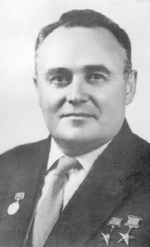
Sergei Korolev (1907-1966)
Know as the chief designer and mastermind behind the Soviet space flight. His ultimate vision was to turn humanity’s dream of cosmic exploration into reality, successfully spearheading the creation and launch of Sputnik 1to prove that space travel was possible.
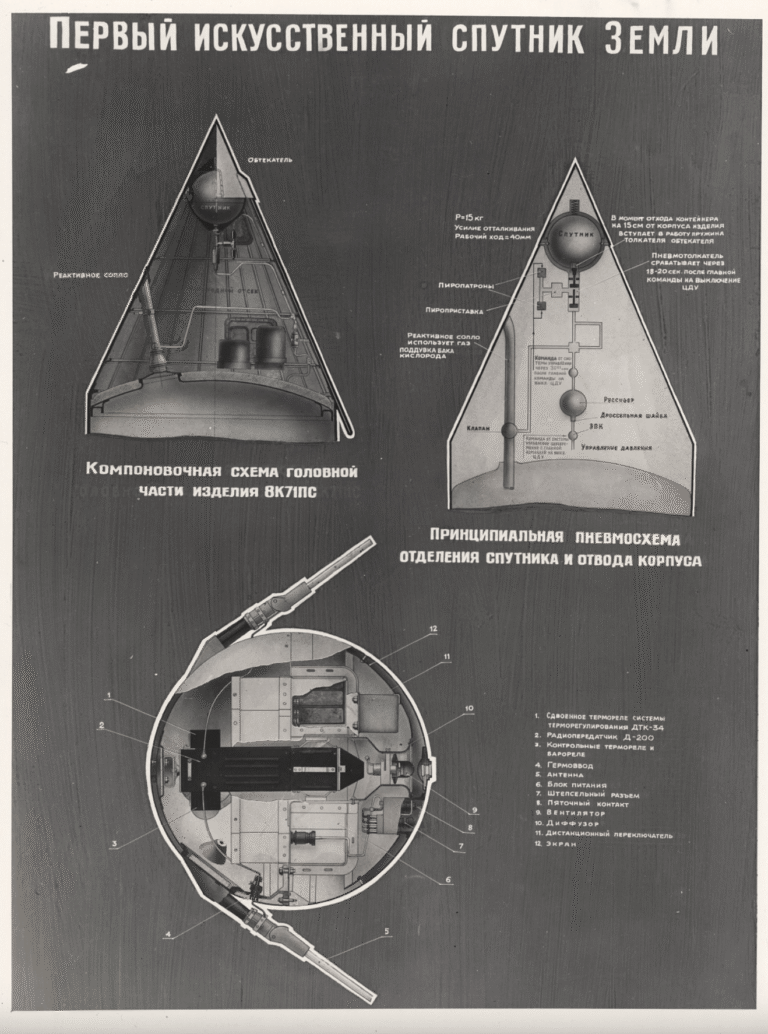
The Blueprint of the Future (Early 1957)
Every historic milestone starts with an idea on paper. Korolev’s team meticulously calculated every single detail, designing a spherical aluminum-alloy shell equipped with dual radio transmitters to beam humanity’s first signals across the globe.
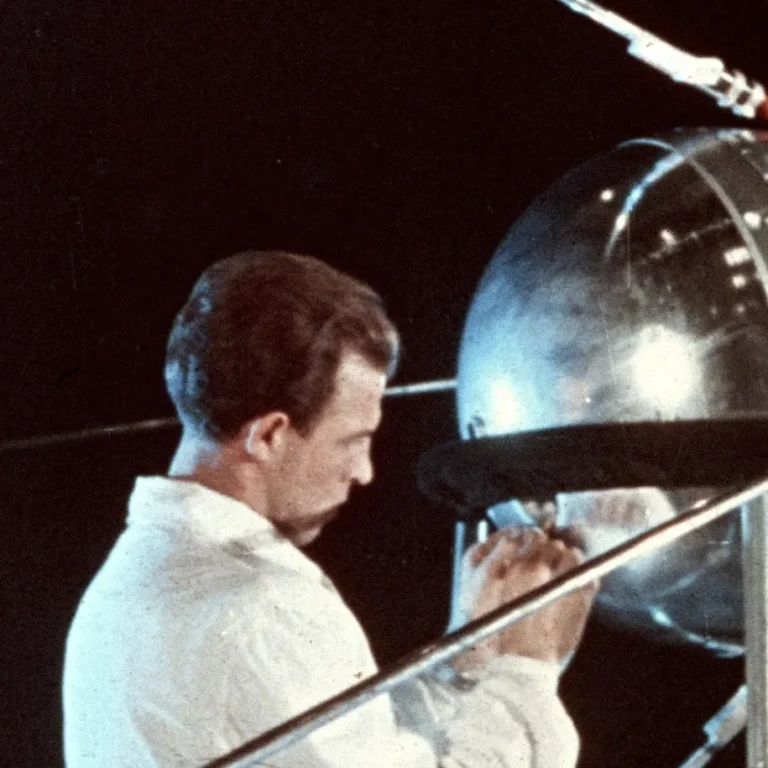
Building History by Hand (Mid 1957)
In the secret workshops of OKB-1, technicians and engineers assembled Sputnik 1 piece by piece. Working under intense pressure, they turned complex mathematical calculations and blueprints into a physical reality that would change space exploration forever.
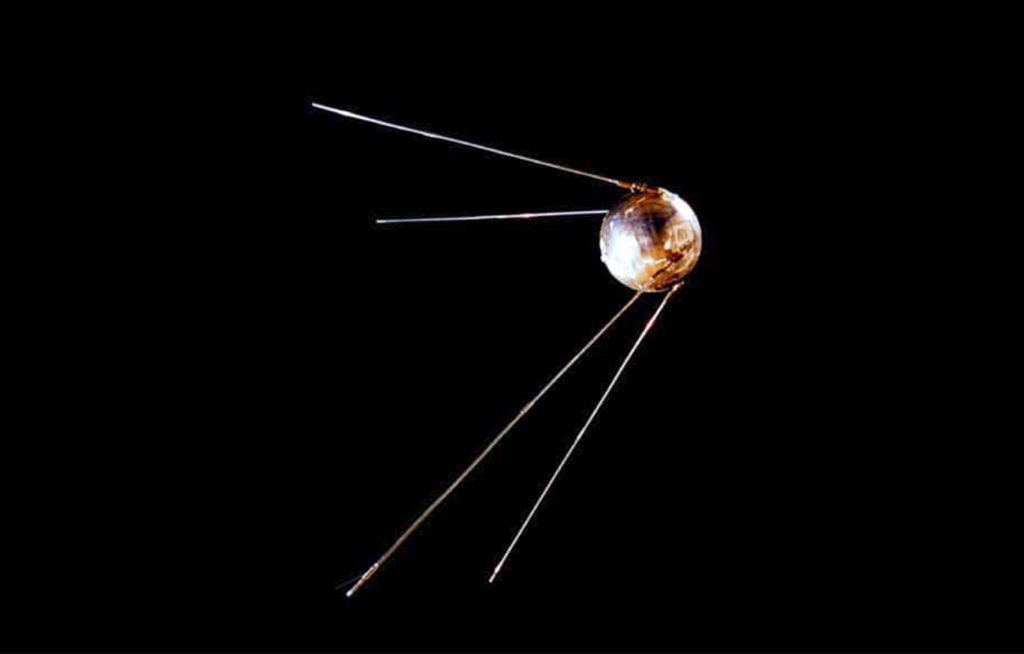
Orbiting the Globe (October 4, 1957)
Moments after launch, Sputnik 1 successfully reached Earth’s orbit, circling the planet every 96 minutes. From the silent void of space, its rhythmic “beep-beep-beep” signal was picked up by radio operators and observatories worldwide, confirming that humanity had officially become a spacefaring species. The impossible had become a reality.
The R-7 Rocket & The Dawn of the Space Age (1957)
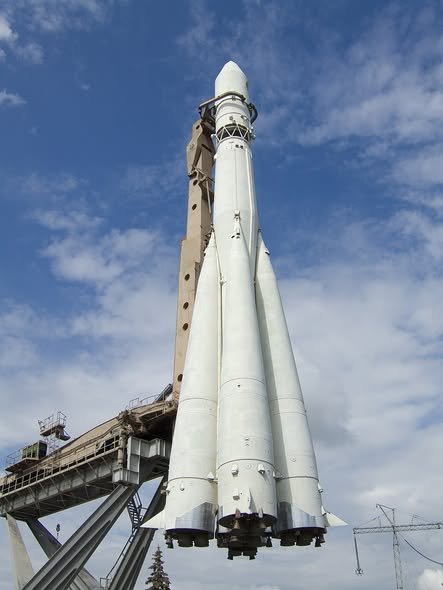
The sophisticated Sputnik 1 satellite was safely integrated atop a modified R-7 intercontinental ballistic missile. On October 4, 1957, at 10:28 PM Moscow time, the colossal rocket roared to life, placing the first artificial satellite into Earth’s orbit. For 21 days, its iconic “beep-beep-beep” signal was heard around the world, marking a new epoch for humanity.
A Global Shockwave (October 1957)
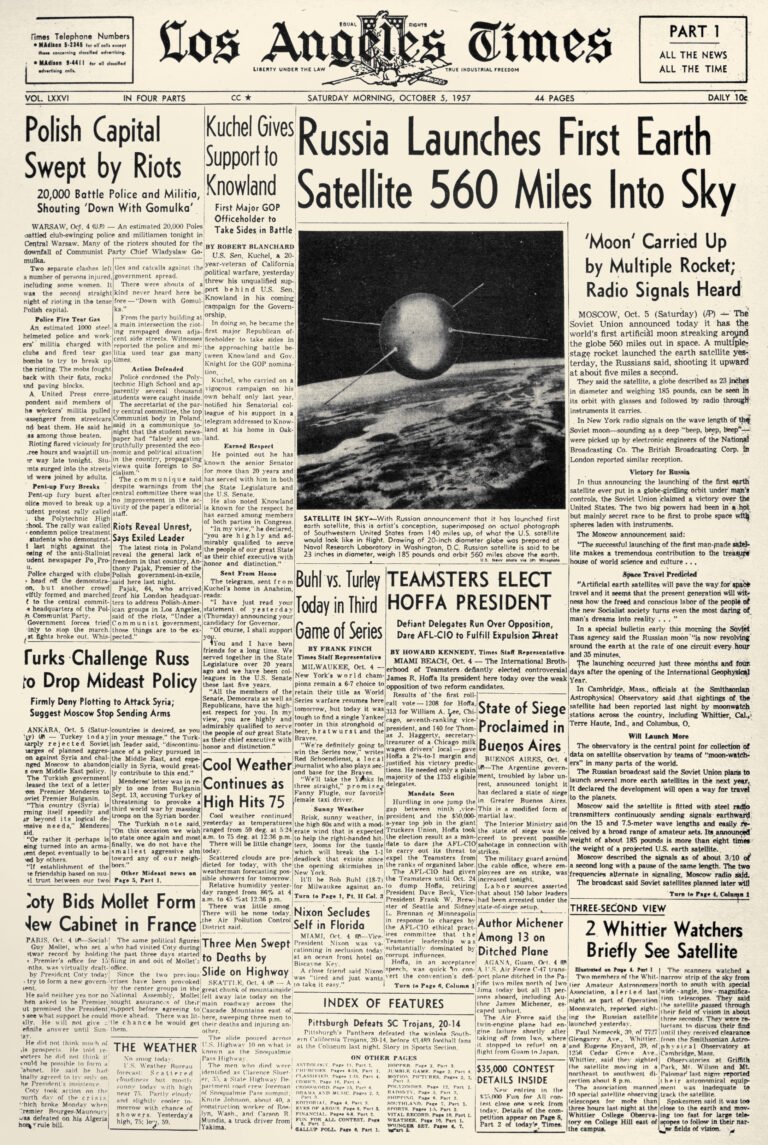
The rhythmic “beep” from above didn’t just signal a scientific achievement; it sent a shockwave across the United States. Americans watched the night sky with newfound unease, realizing that if the Soviets could reach orbit, they could reach any target on Earth. This moment fundamentally reshaped American education, technology, and national security, officially launching the Space Race.
Falling Star (January 1958)
After 92 days of orbiting the Earth and completing 1,440 revolutions, Sputnik 1’s batteries died. On January 4, 1958, the pioneer of the space age re-entered the atmosphere and burned up, transforming from a revolutionary satellite into a brilliant shooting star. Its mission had ended, but humanity’s journey to the stars had just begun.